
Spain’s housing crisis has reached such an extreme level that it is now straining not only the market, but also the political landscape. With insufficient supply, rising prices and an increasingly difficult path to homeownership, the Spanish Government is studying more ambitious measures aimed at curbing speculation and reinforcing the social function of housing.
According to sources familiar with the plans, the core idea is to restrict the purchase of properties that are not intended as a primary residence, especially in areas where prices show extreme levels of tension. The most likely approach would be a fiscal one: imposing tax penalties on investment-driven acquisitions in the markets under greatest pressure. The goal is to protect housing as a constitutional right rather than treat it primarily as an unregulated investment asset.
This type of approach is not entirely new. The Government has already pushed forward initiatives such as a proposed 100% surcharge on property purchases made by non-EU foreigners without Spanish residency — a measure still under debate but which marks a shift in tone.
The current political environment also makes such restrictions more viable. In Catalonia, President Salvador Illa has instructed his team to study the possibility of banning “speculative purchases”, a position aligned with the Catalan left. At the European level, the concern is even greater. For the first time, the European Council included the housing crisis on its agenda, highlighting that cities like Madrid and Barcelona are among the most expensive in Europe relative to average salaries — surpassed only by Lisbon.
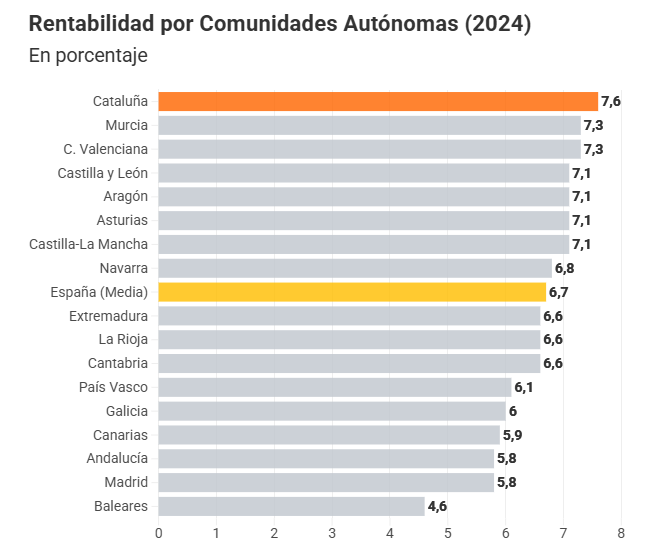
Statistically, the Government also has strong arguments. The Buyer Profile Study 2025 shows that 24% of home purchases in Spain are made for investment purposes, and another 18% correspond to second homes. In total, over 40% of transactions are not related to primary residence, raising concerns about speculative activity.
However, imposing an outright ban on these purchases remains legally challenging. When Sumar proposed this possibility last year, the Socialist Party dismissed it as “extremist”. Similar doubts remain regarding any attempt to apply such a ban in Catalonia.
This makes fiscal disincentives the most realistic path forward. Tax penalties on second or third-home purchases would have a higher chance of passing through Congress, where parties like Esquerra Republicana have already defended similar measures. While previous attempts failed, political and social pressure today is significantly higher.
In a country where supply consistently falls short and where households devote an increasingly large share of their income to housing, the debate on limiting investor-driven purchases is no longer fringe. It is becoming central to how Spain confronts one of its most urgent challenges: ensuring access to a home in a highly unbalanced market.